
Tell us what is going on. We will clarify next steps, recommend the right level of care, and map a plan that supports stability at home, at work, and in relationships.
Private. Discreet. Houston.
Equine-Assisted Psychotherapy in Houston
An experiential, clinician-guided approach that supports emotional regulation, trauma recovery, and addiction treatment by using structured interactions with horses to strengthen insight, boundaries, and connection.
Not sure which program is the right fit? We will recommend the next step after a confidential consultation.
What Is Equine-Assisted Psychotherapy?
Equine-Assisted Psychotherapy (EAP) is a form of experiential therapy that uses structured, clinician-guided interactions with horses to build insight, emotional awareness, and healthier relationship patterns. Horses naturally respond to body language and emotional energy, which can bring patterns like avoidance, people-pleasing, control, or shutdown into clear focus.
EAP at The Heights Treatment does not require horseback riding. Much of the work happens on the ground through activities like grooming, leading, setting boundaries, and problem-solving with the horse.
How Equine-Assisted Psychotherapy Helps
Equine-assisted psychotherapy helps you practice real-time emotional regulation and relationship skills in a structured, clinically guided setting. Horses provide immediate, nonjudgmental feedback—making patterns easier to notice and change.
- Trauma and dysregulation: supports grounding, nervous system regulation, and safe reconnection to the present.
- Emotional awareness: improves recognition of internal cues (stress, shutdown, anger, fear) before escalation.
- Boundaries and communication: builds assertiveness, clarity, and follow-through through hands-on practice.
- Attachment and relationships: strengthens trust-building and healthier relational patterns without relying only on words.
- Addiction recovery: reinforces coping skills, distress tolerance, and relapse prevention by improving regulation under pressure.
Who Is Equine Therapy For?
Equine-assisted psychotherapy can support a wide range of clinical goals—especially when you feel stuck in talk therapy or struggle to access emotions in a traditional office setting. Your team will tailor the approach based on your symptoms, level of care, and what keeps the pattern active.
Addiction Recovery
Supports emotional regulation, coping under stress, and relapse prevention skills that translate into real-world settings.
Trauma and Anxiety
Builds grounding, stress tolerance, and nervous system regulation in the moment, not just in conversation.
Relationships and Attachment
Strengthens boundaries, communication, and trust-building—especially for people who feel disconnected or guarded.
What to Expect
Equine-assisted psychotherapy is structured and clinically guided. You will work with a licensed clinician and trained equine staff in a calm, supervised setting. Sessions focus on practical goals—emotional regulation, boundaries, communication, and coping under stress.
In sessions
- ground-based interaction (no riding required)
- guided practice with boundaries and communication
- real-time coaching for regulation and stress tolerance
- processing insights with your clinician
Between sessions
- carryover goals for relationships and triggers
- skills practice aligned with your primary therapy
- accountability for follow-through and consistency
- step-down continuity across PHP, IOP, and OP
How We Integrate EAP at Heights
Equine-assisted psychotherapy is coordinated with your overall treatment plan—never used as a standalone service. Your primary therapist and clinical team align EAP goals with your symptoms, recovery risks, and level of care.
- Primary therapy alignment: EAP supports the themes you are already working on in individual and group therapy.
- Dual diagnosis focus: supports both mental health symptoms and substance use patterns through better regulation.
- Skills carryover: insights translate into boundaries, coping, and communication outside of sessions.
- Continuity across programs: can be included across IIP, PHP, IOP, and OP when clinically appropriate.
Related Therapy Practices
Equine therapy is often paired with evidence-based therapies to help insights translate into daily life.
Confidential Support Starts Here
Call us for a private consultation. We will listen, answer your questions, and recommend the right next step, including the appropriate level of care and timing.
Contact Us
Equine Therapy FAQ
Common questions about Equine-Assisted Psychotherapy (EAP) in outpatient addiction and mental health treatment.
Do you offer horseback riding as part of equine therapy?
No. Equine-Assisted Psychotherapy at The Heights Treatment is ground-based and focused on structured interaction with the horse, guided by a clinician and trained equine staff.
What happens during an equine therapy session?
You will engage in guided activities such as grooming, leading, observing boundaries, and problem-solving. Your clinician helps you connect the experience to emotions, coping patterns, relationships, and recovery goals.
What conditions can equine-assisted psychotherapy help with?
EAP may support addiction recovery, trauma-related symptoms, anxiety, depression, emotional dysregulation, self-esteem concerns, and relationship or attachment difficulties when clinically appropriate.
Is equine therapy evidence-based?
Research on equine-assisted services suggests potential benefits for mood, anxiety, trauma symptoms, and quality of life. We use EAP as part of a broader evidence-informed treatment plan aligned with your primary therapy and level of care.
Is equine-assisted psychotherapy safe?
Safety is a priority. Sessions are supervised by trained professionals in an appropriate setting, and activities are selected based on clinical fit, physical safety, and emotional readiness.
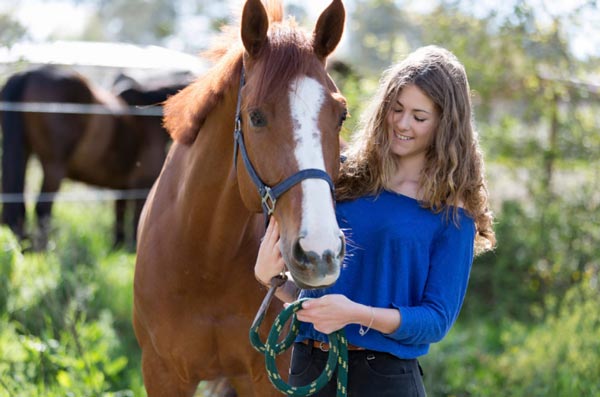
The Many Benefits of Equine Therapy
The Many Benefits of Equine Therapy
Read More
Art Therapy Projects for Addiction Recovery
Art Therapy Projects for Addiction Recovery
Read More
DBT for Addiction (Dialectical Behavior Therapy)
DBT for Addiction (Dialectical Behavior Therapy)
Read MoreSources
This page is for education and does not replace medical advice. If you are in crisis or at immediate risk, call 911.
- American Psychological Association (APA): overview of equine/animal-assisted and experiential approaches. (See: https://www.apa.org/monitor/2019/03/equine-therapy)
- National Institutes of Health (NIH/NCBI): research summaries on equine-assisted services and outcomes. (See: https://www.ncbi.nlm.nih.gov/pmc/articles/PMC7761589/)
- EAGALA: standards and best practices for equine-assisted psychotherapy. (See: https://eagala.org/)
- PATH Intl.: professional standards for therapeutic horsemanship and equine-assisted services. (See: https://pathintl.org/)
Medical Review
This page is reviewed for clinical accuracy by a licensed mental health professional on The Heights Treatment team and updated as needed to reflect current standards of care.