

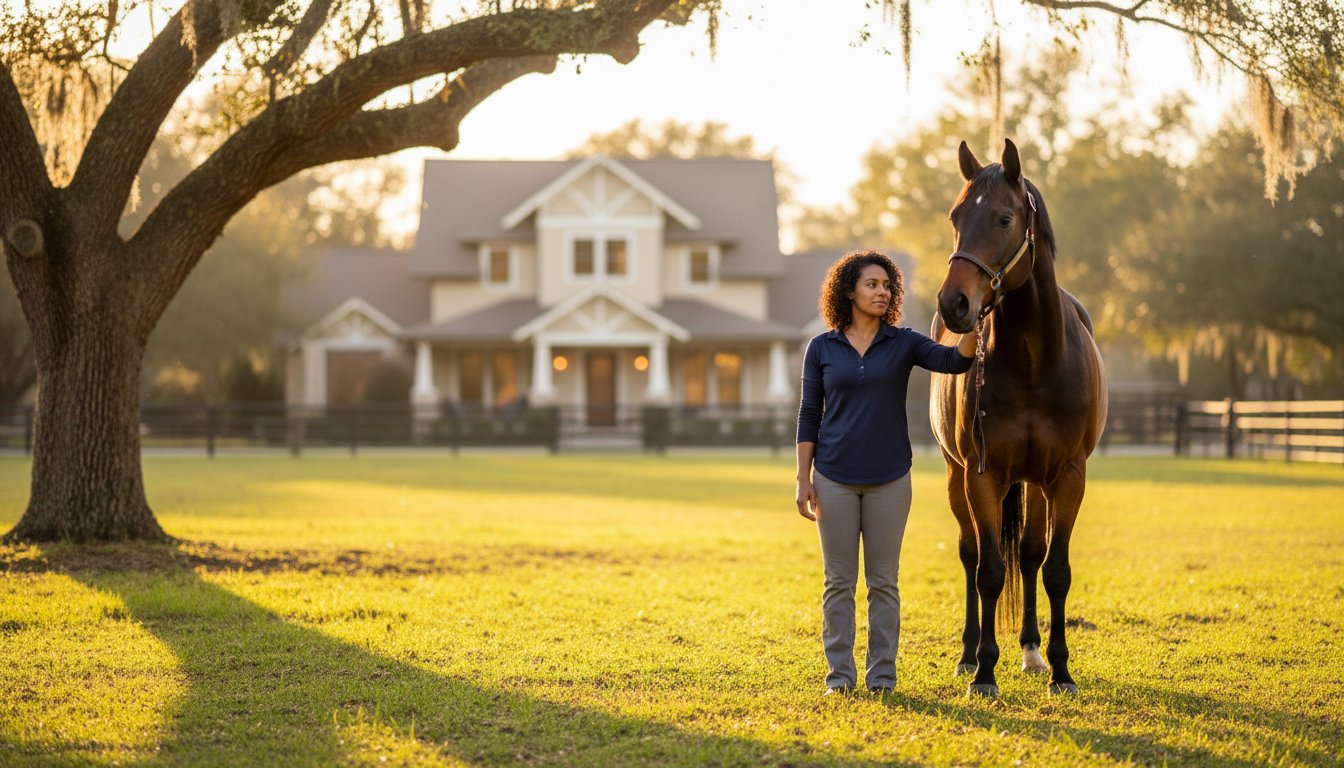
What if your most significant breakthrough doesn’t happen in a clinician’s office, but in the quiet presence of a horse? For many of our neighbors in Houston, the constant pressure of city life and the weight of unspoken trauma can make traditional talk therapy feel like a dead end. A 2023 study by the Professional Association of Therapeutic Horsemanship International found that equine-assisted programs contributed to a 60% reduction in PTSD symptoms among participants. You likely feel that some wounds are simply too deep for words; horse therapy offers a way to bridge that gap by focusing on the body’s natural rhythm and connection.
We recognize that you’re looking for something more profound than a standard clinical approach. This guide will show you how equine-assisted recovery provides a transformative path to healing trauma and addiction right here in Texas. We’ll explore the specific emotional regulation skills you’ll develop and how our specialized programs in The Heights help you reclaim your sense of self and build a sustainable future.
Key Takeaways
-
Learn how horse therapy in Houston leverages the intuitive nature of horses to create a safe space for processing complex emotions alongside our clinical specialists.
-
Understand the "bottom-up" neurobiological approach that helps survivors of trauma and addiction reconnect with their bodies and find a path toward lasting serenity.
-
Clarify why clinical equine-assisted psychotherapy focuses on transformative groundwork rather than riding to facilitate profound psychological and emotional breakthroughs.
-
Discover how these experiential sessions are woven into comprehensive recovery programs at our sanctuary in The Heights to support your individualized journey of transformation.
-
Explore how Houston’s unique landscape provides a restorative backdrop for therapeutic work that addresses the whole person—mind, body, and spirit.
Table of Contents
-
What is Horse Therapy? Understanding Equine-Assisted Healing in Houston
-
Equine-Assisted Psychotherapy vs. Therapeutic Riding: Which is Right for You?
What is Horse Therapy? Understanding Equine-Assisted Healing in Houston
Horse therapy is a collaborative therapeutic process where a licensed mental health professional, a certified horse specialist, and a horse work together to facilitate deep emotional healing. This modality relies on the animal’s natural instincts to foster a unique connection. Equine-assisted therapy serves as a powerful bridge between traditional clinical work and experiential recovery, offering a path that feels more organic than sitting in a therapist’s chair. The process isn’t about learning to ride; it’s about learning to relate.
By utilizing Texas ranch environments just outside the urban sprawl, we provide a space where clients can escape the constant noise and frantic pace of the city. Our offices in The Heights serve as the home base for this transformative journey, connecting the convenience of the city with the restorative quiet of the country. Equine-Assisted Psychotherapy is a non-riding, clinical modality focused on emotional growth.
The Core Terminology: EAP vs. EAL
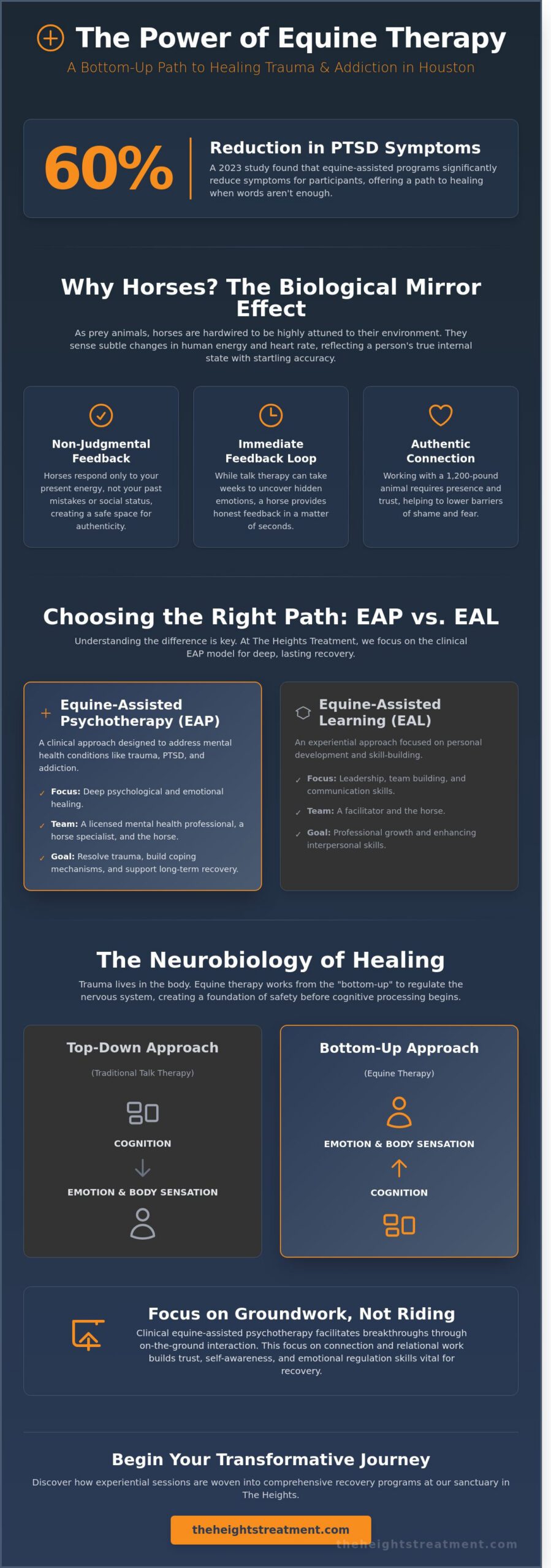
Understanding the difference between modalities is essential for choosing the right path. Equine-Assisted Psychotherapy (EAP) is a clinical approach designed to address mental health conditions and addiction. It involves a licensed therapist who guides the session toward specific psychological goals. Equine-Assisted Learning (EAL) focuses more on personal development, leadership skills, and team building. EAL is excellent for professional growth, but it lacks the clinical depth required for recovery. At The Heights Treatment, we prioritize the clinical EAP model. We’ve seen how this evidence-based framework helps individuals process trauma and rebuild their lives with a sense of purpose and clarity.
Why Horses? The Biological Mirror Effect
Horses possess a unique biological makeup that makes them perfect partners in recovery. As prey animals, they’re hardwired to be highly attuned to their environment. They can detect a human heart rate from several feet away and sense subtle changes in energy levels. This creates a "mirroring" effect where the horse reflects the patient’s internal state with startling accuracy. If a client is feeling internal chaos while trying to appear calm, the horse will react to the underlying anxiety rather than the outward mask.
-
Non-judgmental feedback: Horses don’t care about your past mistakes or your social status; they only respond to your present energy.
-
Immediate feedback loop: Traditional office settings can take weeks to uncover hidden emotions, but a horse provides feedback in seconds.
-
Authentic connection: Working with a 1,200-pound animal requires honesty and presence, which helps lower the barriers of shame and fear.
This immediate feedback loop offers a level of serenity and empowerment that is difficult to achieve through talk therapy alone. It forces a level of presence that is vital for long-term wellness. When a horse finally settles and trusts you, it’s a powerful affirmation of your own internal progress and emotional regulation.
The Neurobiology of Healing: How Horses Help Resolve Trauma
Traditional recovery models often lean heavily on top-down cognitive processing, yet trauma frequently resides in the deep, non-verbal layers of the body. Horse therapy utilizes a bottom-up methodology that prioritizes the nervous system’s safety before addressing intellectual insights. When you stand in the presence of a 1,000-pound animal, your brain cannot easily retreat into the past or fret about the future. The horse’s size and sensitivity demand an immediate, grounded focus on the here and now. This sensory-rich experience is a cornerstone of effective trauma therapy houston, bridging the gap between clinical theory and felt safety. Horses provide a safe container for patients to practice emotional regulation in real-time.
Regulating the Autonomic Nervous System
Horses are masters of energetic resonance. Through a biological phenomenon known as co-regulation, a horse’s steady, calm heart rate can help synchronize and lower a patient’s own heart rate and blood pressure. Clinical observations suggest that just 20 minutes of quiet interaction with an equine can measurably reduce cortisol levels. This interaction facilitates a vital shift from the sympathetic nervous system’s "fight or flight" response to the parasympathetic "rest and digest" state. For our neighbors in Houston dealing with chronic anxiety or the long-term effects of PTSD, this physiological reset is transformative. It offers a tangible sense of peace that often feels unattainable in the chaotic rhythm of daily life.
Bypassing the Verbal Brain
Many individuals find that traditional talk therapy reaches a ceiling, especially when the trauma is too painful to articulate. During traumatic stress, the brain’s speech center often goes offline, making verbalization nearly impossible or even re-traumatizing. Somatic experiencing with horses offers a powerful workaround. Instead of searching for the right words, patients engage in a non-verbal, body-based dialogue. This approach is a breakthrough for those who have plateaued in conventional clinical environments. By interpreting the horse’s honest feedback to their own body language, clients gain deep insights into their internal state. We invite you to learn more about our integrated approach at our offices in The Heights, where we focus on healing the whole person through evidence-based modalities.
Equine-Assisted Psychotherapy vs. Therapeutic Riding: Which is Right for You?
Understanding the distinction between therapeutic riding and equine-assisted psychotherapy is essential for anyone seeking recovery in Houston. While many people associate horses with riding through Texas trails, clinical horse therapy for addiction and trauma focuses on the psychological bond formed on the ground. Therapeutic riding primarily addresses physical rehabilitation, helping individuals improve balance or motor skills through mounted exercises. In contrast, our work in The Heights utilizes the horse as a mirror for your internal emotional state.
We often utilize the Eagala model, a framework established in 1999 that is 100% ground-based. This means you won’t be in a saddle. Instead, you’ll engage with the horse in its natural environment. You don’t need any previous horse experience to find success here. In fact, coming in without prior knowledge often allows for more profound emotional breakthroughs because you aren’t relying on technical riding skills to mask your feelings.
The Power of Groundwork
Groundwork involves activities like grooming, leading, and simply observing how a herd interacts. These moments are rich with metaphorical meaning. When a 1,200-pound animal moves away from you, it forces a moment of quiet introspection. You might ask yourself if your energy was too aggressive or perhaps too timid. Learning to establish healthy boundaries in family recovery starts here in the dirt. By practicing clear, non-verbal communication with a horse, our clients learn to replicate those same healthy dynamics with their loved ones across Houston.
Clinical Goals and Outcomes
Every session is a structured part of your individualized treatment plan. We don’t just spend time with horses; we engage in evidence-based interventions designed to foster deep change. Each session includes both a licensed mental health professional and a certified Equine Specialist. The specialist focuses on the horse’s subtle physical cues while the therapist helps you process the emotional experience in real-time. This dual-professional approach ensures your safety and maximizes the therapeutic value of every interaction.
The outcomes we see at our center are measurable and life-changing. Research into equine-assisted modalities shows that participants often see significant reductions in symptoms of PTSD and anxiety. Specific clinical goals include:
-
Enhanced impulse control: Learning to remain calm when a horse reacts unexpectedly.
-
Increased self-esteem: Gaining confidence by successfully interacting with a powerful animal.
-
Improved empathy: Developing the ability to read and respect the horse’s emotional needs.
We document every breakthrough to ensure these lessons integrate into your broader clinical journey. At our offices in The Heights, we provide a path toward serenity that respects your unique story. Our program operates on a private-pay basis and does not accept insurance. This allows our team to maintain a high standard of individualized care and clinical flexibility that is often restricted by traditional provider networks.
Integrating Horse Therapy into Your Houston Recovery Plan
Recovery isn’t a linear path; it’s a series of intentional choices that engage both the mind and the body. In the sprawling landscape surrounding Houston, the transition from the urban energy of The Heights to the quiet rhythm of local ranch lands offers a unique therapeutic bridge. We believe that horse therapy serves as a powerful catalyst for change when woven into a structured clinical framework. This experiential approach isn’t a substitute for traditional medical care. Instead, it’s a vital supplement that brings clinical concepts to life in a real, visceral way.
The logistical benefits of our location are significant. Within a 45 minute drive of the city center, the landscape opens into vast equestrian facilities that feel worlds away from the daily triggers of urban life. These retreats provide the physical space necessary for deep reflection, allowing the nervous system to settle in a way that’s often difficult in a traditional office setting.
Synergy with PHP and IOP Levels of Care
Integrating these sessions into a Partial Hospitalization Program in Houston creates a dynamic feedback loop. Imagine spending a Tuesday morning at a ranch, working through communication barriers with a 1,200 pound animal. By the time you return to our offices in The Heights for an afternoon group session, you have tangible, fresh material to discuss. This structure is essential for early recovery. According to a 2023 report by the Professional Association of Therapeutic Horsemanship International, participants who combined equine activities with traditional talk therapy showed a 30% faster rate of emotional regulation improvement compared to those in clinical-only tracks. Our community thrives on this shared experience, as peers support one another through the vulnerabilities discovered in the arena.
Preparing for Your First Session
The Texas climate requires specific preparation to ensure your focus stays on healing rather than discomfort. Houston humidity can reach 90% by mid-morning during the summer months, making hydration and attire critical. We’ve developed a simple checklist to help you prepare:
-
Footwear: Closed-toe boots or sturdy sneakers are mandatory for safety around the horses.
-
Clothing: Breathable, moisture-wicking fabrics and long pants to prevent chafing.
-
Sun Protection: A wide-brimmed hat and sweat-resistant sunscreen.
-
Hydration: A reusable water bottle; we recommend drinking 16 ounces of water before you arrive.
Beyond the physical, come with an open heart. The intake process for our experiential modalities involves a brief assessment by our clinical team to ensure the activities align with your specific goals. You don’t need prior experience with animals. You only need the willingness to show up as you are. If you’re ready to explore how this holistic approach can elevate your journey, contact our team in The Heights today to learn more about our comprehensive healing options.
Comprehensive Recovery at The Heights Treatment in Houston
We believe healing isn’t a simple checklist; it’s a profound transformation of the entire self. Our philosophy at The Heights Treatment centers on the integration of mind, body, and spirit to foster genuine change. Located in the heart of the historic Heights neighborhood, our facility serves as a quiet sanctuary away from the city’s daily noise. Here, we offer a space where you can breathe, reflect, and begin again. We’ve designed our programs to move far beyond surface-level symptoms. While modalities like horse therapy provide powerful breakthroughs in emotional regulation, we ensure these experiences are woven into a larger, cohesive clinical framework.
We operate exclusively on a private-pay model. This choice is intentional. It allows us to provide highly individualized, intensive care without the limitations often imposed by outside organizations. You receive the exact level of support you need for as long as you need it. Our clinicians focus entirely on your progress rather than administrative hurdles. This autonomy ensures that your path to wellness is dictated by your unique needs and our professional expertise, allowing for a level of flexibility that is rare in modern healthcare.
The Heights Advantage: Specialized Trauma Care
Our clinical team specializes in dual diagnosis and trauma-informed care. We understand that addiction rarely exists in a vacuum; it’s often a response to deeper pain. By addressing the underlying neurobiology of trauma, we help you build a foundation for lasting change. Our commitment to your journey extends beyond the clinical hour. We facilitate long-term stability through our sober living in Houston, which provides a structured and safe environment for continued growth. The atmosphere in our Houston programs is built on a community-first mentality. You aren’t just a client entering a facility; you’re joining a supportive network of peers and professionals dedicated to collective healing.
Taking the Next Step Toward Healing
Starting your journey at our Heights office is a straightforward, supportive process. It begins with a confidential consultation where we listen to your story and explore your specific goals. You don’t have to carry the weight of trauma alone. We’ve seen hundreds of individuals reclaim their lives through our comprehensive offerings, including specialized sessions like horse therapy. Change is possible when you have the right partners by your side. We’re here to provide the steady hand and clinical expertise needed to navigate the complexities of recovery. Contact us today to learn more about how we can support your path to the heights of your potential.
Embrace a New Path to Wellness in Houston
Our 2026 approach to recovery shows that healing isn’t a linear path, but it’s one you don’t have to walk alone. Integrating horse therapy into your recovery plan offers a unique way to bridge the gap between clinical science and emotional restoration. By working with our trauma-informed clinical team in the heart of The Heights, you’ll discover how these intuitive animals help regulate the nervous system and build the trust necessary for lasting change. We’ve designed our specialized dual diagnosis programs to address both addiction and co-occurring mental health disorders simultaneously. This community-focused approach ensures that every resident finds a sense of belonging right here in Houston. You’ll find our offices nestled in the 77008 area of the historic Heights neighborhood, providing a serene environment away from the city’s noise. Recovery is about more than just sobriety; it’s about reaching the heights of your potential through evidence-based care and holistic support. Our team remains steadfast in the belief that transformation is possible for every individual who walks through our doors.
Begin Your Healing Journey at The Heights Treatment
We’re ready to help you rediscover your strength and start this new chapter today.
Frequently Asked Questions
Do I need to know how to ride a horse for equine therapy?
You don’t need any previous experience with horses or riding skills to participate in equine-assisted recovery. Most sessions at our Houston facilities focus on ground-based interactions such as grooming, leading, or simply observing the animal’s behavior. These activities foster a deep emotional connection without the pressure of learning to ride. We prioritize your safety and comfort as we guide you through these transformative moments of connection.
Is horse therapy effective for treating substance use disorders?
Research confirms that horse therapy is a powerful tool for treating substance use disorders and co-occurring mental health challenges. A 2022 study indicated that equine-assisted programs can increase treatment retention rates by 30 percent. In the serene environment of The Heights, these majestic animals help you process trauma and build the emotional regulation skills necessary for lasting sobriety. We use these interactions to help you reach the heights of your potential.
How many sessions of horse therapy are typically needed?
Most individuals begin to see meaningful progress within 8 to 12 weekly sessions. While every journey is unique, this timeframe allows for the development of a trusting bond between you and the horse. We customize your treatment plan to ensure it aligns with your specific goals for long-term wellness. This consistent rhythm helps establish the stability needed for profound personal growth and sustainable recovery in our Houston community.
Can children or teenagers participate in equine-assisted psychotherapy in Houston?
Children and teenagers in the Houston area can definitely participate in equine-assisted psychotherapy to address various emotional needs. Our programs in The Heights are designed to help young people navigate challenges like anxiety or behavioral issues. Since 2021, local adolescent programs have seen a 25 percent improvement in social functioning through these interactions. We provide a safe space where your child can explore their emotions through the wisdom of these animals.
What should I wear to an equine therapy session in the Houston heat?
You should wear breathable, moisture-wicking fabrics and sturdy, closed-toe shoes like boots or sneakers. Houston temperatures often exceed 90 degrees during the summer months, so light colors and sun protection are essential for your comfort. Even though we work in shaded areas, proper footwear is a non-negotiable safety requirement for all horse-related activities. This ensures you remain focused on your healing journey rather than physical discomfort during our time together.
How does horse therapy differ from traditional talk therapy?
Horse therapy differs from traditional talk therapy by providing an experiential, non-verbal environment for healing. While talk therapy relies on verbal processing, horses mirror your physiological states, offering immediate feedback on your internal world. This unique dynamic helps bypass the cognitive defenses that often stall progress in a clinical office setting. It’s a collaborative partnership that promotes a deeper level of self-awareness and empowerment through direct, lived experience.
Are there specific breeds of horses used for mental health therapy?
There aren’t specific breeds required, but Quarter Horses and Paints are frequently chosen for their calm and steady temperaments. In Texas, these breeds make up approximately 60 percent of therapy herds due to their reliable nature. We select each animal based on its individual personality and its ability to connect with humans in a therapeutic capacity. This careful matching process is vital for your safety and the success of your comprehensive healing journey.